Reflections on Vivaldi's "Gloria"
Picture this: It's around 1715 in Venice. A young priest with a shock of red hair stands before a group of orphaned girls at the Ospedale della Pietà, teaching them music that will echo through centuries. Antonio Vivaldi couldn't have known then that his Gloria RV 589 would still be teaching us lessons about education more than three hundred years later.
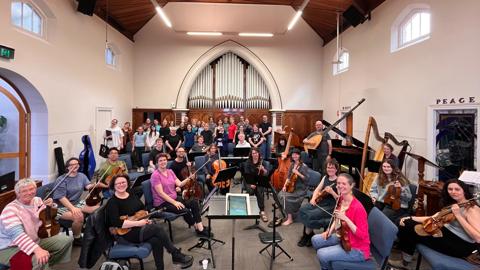
Today, here in Lutruwita/Tasmania, we're recreating something remarkable—not just Vivaldi's masterpiece, but his entire philosophy of learning. As I stand amongst this ensemble of young musicians taking their first serious steps and seasoned professionals still refining their craft, I'm struck by a profound truth: education isn't a phase of life. It's the very fabric of being alive.
I remember singing this exact piece in my school choir. I was young, uncertain, finding my voice among others. That experience didn't stay in the past—it lives in me still, shaping how I understand music, collaboration, and my own capacity to grow. That's what education does. It doesn't fill a bucket and move on; it plants seeds that bloom throughout our entire lives.
Look at our orchestra today. We have Fellows, past and present, wrestling with the intricate demands of historically informed performance practice. It's harder than it looks—this business of reaching back through time to understand how Vivaldi's contemporaries would have breathed life into these notes. But they're doing it, learning alongside some of the finest baroque specialists and choral conductors in Australia. The young learning from the experienced. The experienced discovering something new through the fresh perspective of the young.
This is education at its most beautiful: mutual, generous, ongoing.
We've extended this spirit further by commissioning young Tasmanian composer Benjamin James Raymond to create something new. Working with the Burnie Stringalong Orchestra under the mentorship of Jabra Latham, Benjamin is experiencing what Vivaldi once did—the thrill and terror of hearing your work come to life. We're not just preserving history; we're actively participating in the same cycle of learning and creating that has sustained music for centuries.
And then there's Xavier Gandy, a talented young recorder player stepping into the spotlight with Giuseppe Sammartini's beautiful concerto. His journey is just beginning. We're also featuring Alice Chance, an Australian composer who has devoted herself to working with young people in settings like Moorombilla Voices. Her piece So Strong demonstrates what happens when someone with experience and skill turns their attention to nurturing the next generation—beauty multiplies.
This entire program is a living argument for education as a lifelong commitment. Not education as something imposed from above, but education as a conversation across generations, across centuries even. The young bring energy, fresh questions, and unformed potential waiting to be shaped. Those further along bring perspective, technique refined through years of practice, and the humility that comes from knowing there's always more to learn.
The minute we stop learning is the minute we stop fully living. Education—whether at seven or seventy—keeps us curious, humble, and engaged with life itself. It connects Vivaldi's 1715 orphanage to our concert venues in today's Lutruwita.
GLORIA performs at St Canice (Thu 11 Dec) and Mount Gnomon Farm (Sunday 14 Dec). More information here.